Sustainability of the Mitsubishi Estate Group and Society: Four Key Theme
Visualizing the Value Creation Process Using Logic Models
Visualizing the Value Creation Process Using Logic Models
Four Key Themes
Visualization of the Value Creation Process Through Logic Models
The Mitsubishi Estate Group has formulated logic models for its four key themes to further clarify the creation of social value through its business activities and the process by which it is created. By visualizing the links between business activities, “Outputs,” “Outcomes,” and “Impact” for each theme, the Group manages progress using indicators and KPIs.
Going forward, through ongoing dialogue with stakeholders, we will further develop Outcome and Impact KPIs and continue to analyze indicators, thereby enhancing the effectiveness of our strategies for increasing social value and contributing to the sustainable improvement of corporate value.
Background and Rationale for Formulating Logic Models
Challenges in Advancing the Two Management Strategies
Under its Long-Term Management Plan 2030, formulated in 2020, the Mitsubishi Estate Group has pursued a management approach centered on two complementary strategies — increasing social value and increasing shareholder value — with the aim to achieve sustainable growth for both society and the Company.
However, with respect to the social value enhancement strategy, the links to the Company’s business activities and its contribution to corporate value had not been sufficiently articulated, and further efforts were needed to embed the strategy throughout the organization. In response to these issues, in FY2024, we conducted a review of material issues from a double-materiality perspective, revised the key sustainability issues, clarifying that its core business of urban development itself creates social value.
In FY2025, to further deepen its dual management strategy, Mitsubishi Estate employed logic models to clarify the links between its businesses and social value enhancing strategy and to visualize the social value created by its business operations and its value creation process.
Addressing the Issues Using Logic Models
Each of the Group’s ten business and functional groups formulated logic models for the sustainability themes with most relevance to them, resulting in a total of 29 logic models.
By sorting the initiatives and measures into five elements — “Inputs,” “Activities,” “Outputs,” “Outcomes,” and “Impacts” — we systematically visualized how business operations translate into the creation of social value.
Alongside the development of logic models, we also worked to establish indicators and KPIs to measure and visualize the progress of the impacts identified by each business or functional group. Beginning in FY2026, these identified impacts will be positioned as medium- to long-term goals for our strategies to increase social value, and each business or functional group will manage progress on indicators and KPIs as part of its annual plan to strengthen its commitment to implementing management with the two strategic drivers.
For external disclosure, we consolidated the logic models developed by each business or functional group to create Group-wide logic models through a bottom-up process. These logic models demonstrate the structure of value creation that the entire Group shares while taking into account the characteristics of each business. They also make clear how social value and shareholder value generate a virtuous cycle through our business operations.
What Is a Logic Model?
A logic model visualizes the process through which business activities create social value by organizing the links among “Inputs,” “Activities,” “Outputs,” “Outcomes,” and “Impact.”
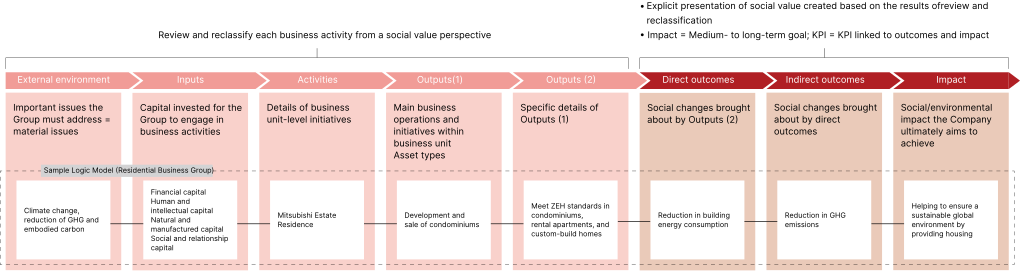
Logic Models for the Four Key Themes
-
Pursue tangible and intangible urban development for the next generation
(Urban development and services) “Urban areas of choice” that are valued by all generations and develop organically Learn More -
Maintain commitment to reducing environmental impact
(The global environment) Realization of sustainable urban areas and global environment Learn More -
Consider people, empathize with people, protect people
(Respect for people) A society in which diverse people can work and live happily Learn More -
Create and circulate new value
(Value creation) Anticipating changing times and fostering affluence and convenience Learn More
Logic Model — Urban Development and Services
Major Indicators to Measure Progress
Mitsubishi Estate monitors the progress of the major outcomes in the logic model presented above using the following kinds of indicators.
| (1) Enhancement of area-wide resilience | (2) A premier business cluster and tenant mix | (3) Greater satisfaction for tenants, workers, and visitors | (4) Value creation across diverse assets and communities in both tangible and intangible aspects | ||||
|---|---|---|---|---|---|---|---|
| Indicators | 2030 targets | Indicators | 2030 targets | Indicators | 2030 targets | Indicators | 2030 targets |
|
- |
|
- |
|
Not disclosed |
|
Not disclosed |
|
- |
|
- |
|
Not disclosed |
|
Not disclosed |
|
- |
|
- |
|
- |
|
Not disclosed |
|
- |
|
- |
|
- |
|
¥10 trillion |
Scroll horizontally
- The 2030 targets listed here are those that have been established as of the current date. They will be reviewed as appropriate, in light of changes in the business environment and business progress.
Logic Model — The Global Environment
Major Indicators to Measure Progress
Mitsubishi Estate monitors the progress of the major outcomes in the logic model presented above using the following kinds of indicators.
| (1) Improvement of environmental performance and reduction operational carbon | (2) Reduction of environmental impact from building development and demolition | (3) Sequestration and storage of carbon through use of timber in buildings | (4) Conservation and improvement of local natural environment | ||||
|---|---|---|---|---|---|---|---|
| Indicators | 2030 targets | Indicators | 2030 targets | Indicators | 2030 targets | Indicators | 2030 targets |
|
100% (Buildings owned by Mitsubishi Estate) |
|
100% |
|
100% |
|
- |
|
20% reduction in volume of waste (vs FY2019), 100% recycling rate |
|
2/year |
|
0 unaddressed species | ||
|
100% |
|
100% |
|
100% | ||
|
100% |
|
Not disclosed | ||||
Scroll horizontally
- Transfer basis for condominiums for sale and completion basis for rental apartments.
- DBJ Green Building certification: 100% maintenance of 3-star or higher certification with existing properties, and acquisition of 5-star certification with new properties in Marunouchi area
- The 2030 targets listed here are those that have been established as of the current date. They will be reviewed as appropriate, in light of changes in the business environment and business progress.
Logic Model — Respect for People
Major Indicators to Measure Progress
Mitsubishi Estate monitors the progress of the major outcomes in the logic model presented above using the following kinds of indicators.
| (1) Enhanced living and working environments through well-being | (2) Contribution to responsible and sustainable supply chains | (3) Promotion of Mitsubishi Estate employee health and engagement | (4) Development of positive workplace environments and relationships | ||||
|---|---|---|---|---|---|---|---|
| Indicators | 2030 targets | Indicators | 2030 targets | Indicators | 2030 targets | Indicators | 2030 targets |
|
- |
|
100% |
|
Previous-year level |
|
1 or more at each site/year |
|
- |
|
10 sites or more/year (5 construction sites, 5 cleaning sites) |
|
Over 20% |
|
All-industry average score |
|
- |
|
2.7% |
|
100% or higher | ||
|
- |
|
Health check-ups 100% Cancer screenings 90% |
|
90% or higher | ||
Scroll horizontally
- Construction sites commenced since FY2024 and cleaning sites at properties managed by Mitsubishi Jisho Property Management Co., Ltd. (contracted by Mitsubishi Estate)
- The 2030 targets listed here are those that have been established as of the current date. They will be reviewed as appropriate, in light of changes in the business environment and business progress.
Logic Model — Value Creation
Major Indicators to Measure Progress
Mitsubishi Estate monitors the progress of the major outcomes in the logic model presented above using the following kinds of indicators.
| (1) Establishment of business creation ecosystem | (2) Social implementation of new technologies and services | (3) Greater productivity, lifestyle convenience, and safety through use of AI and digital technology | (4) Quality of life and convenience aligned with the times | ||||
|---|---|---|---|---|---|---|---|
| Indicators | 2030 targets | Indicators | 2030 targets | Indicators | 2030 targets | Indicators | 2030 targets |
|
3/year |
|
1/year*1 |
|
Not disclosed |
|
- |
|
- |
|
90,000 |
|
Not disclosed |
|
5,500 |
|
- | ||||||
|
Not disclosed | ||||||
Scroll horizontally
- Non-consolidated target for Mitsubishi Estate Residence Co., Ltd.
- Percentage of users who responded that the chatbot’s answers were “Not helpful”
- The 2030 targets listed here are those that have been established as of the current date. They will be reviewed as appropriate, in light of changes in the business environment and business progress.
Key Insights and Future Direction
The formulation of logic models enabled visualization of how the Mitsubishi Estate Group’s business operations create social value as a coherent narrative. It also reaffirmed that each business contributes to solving social issues in various ways through its materiality assessment, and served as an opportunity to deepen the shared understanding within the Group.
At the same time, challenges also remain in establishing appropriate indicators for evaluating the progress on impacts. In particular, we recognized a need to objectively demonstrate the diverse effects of value creation in the key theme of “urban development and services,” which embodies the Group’s urban development operations, and provide meaningful and credible measures for both internal and external stakeholders.
The development of these logic models represents the first step toward a management approach that treats social value and shareholder value as a fully integrated process. Going forward, we will work to further enhance the value creation process by pursuing the development of outcome and impact KPIs and analyzing them holistically while engaging in iterative rounds of dialogue with stakeholders. With these efforts, we will enhance the effectiveness of our strategies to increase social value while translating them into a sustainable enhancement in corporate value.
Comments From Experts
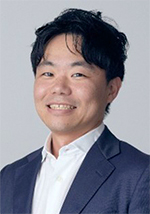
Masato Nakamura
Partner
GLIN Impact Capital
I would like to express my tremendous respect for the fact that the Mitsubishi Estate Group, which operates diverse businesses, formulated these logic models, which were broken down all the way into concrete actions and KPIs, and then disclosed them externally. While disclosure of material issues and value creation models is becoming increasingly common, it is still rare, both in Japan and internationally, for companies to develop and disclose a logic model linked to the business unit level, and that can be regarded as a pioneering initiative. In particular, the fact that the models for each business unit and theme are integrated and elevated into a company-wide model is very significant in connecting sustainability management to day-today operations. I also give the initiative a high rating for organizing the causal relationships between business activities and social value and serving as a guide for management. Going forward, I hope that the Mitsubishi Estate Group will further strengthen the linkage between sustainability and management by deepening its understanding of the structure of social issues and clearly articulating strategies that build on its distinctive strengths.
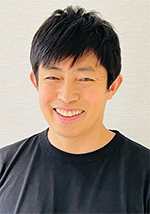
Kazuo Tase
President & CEO
SDG Partners, Inc.
I highly commend the fact that the recently established logic models were constructed with precision and imagination, addressing what the Mitsubishi Estate Group will do, how it will evolve, and ultimately what the company aspires to achieve. For example, the perspectives on diversity and wellness and the focus on ensuring a sustainable supply chain in the Residential Business are impressive, as well as the depth in which the relevant time horizons and causal relationships have also been thought out. A clear logic and an elevated perspective are also apparent in areas such as the development of the Marunouchi area, the creation of new businesses, and initiatives in the global environmental field. Going forward, I hope that the impacts will be elevated to the level of norms and values that are embedded in society. Just as the act of planting seeds created agriculture and laid the foundation of civilization, the business operations of the Mitsubishi Estate Group also have the power to guide society toward a better future. I look forward to seeing this concept be deeply embedded in the actions of each and every employee.
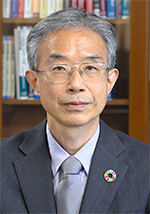
Takeshi Mizuguchi
President
Takasaki City University of Economics
I believe that the reframing of the business activities from the perspective of social value creation is of key significance for a company reaffirming its purpose. Social value underlies all forms of economic value, and the essence of business is how effectively it is converted into economic value. I would like to express my respect for the fact that the Mitsubishi Estate Group developed logic models for each business group to foster a shared understanding of social value creation. At the same time, I hope to see the Mitsubishi Estate Group apply its expertise to the solution of broader social issues in Japan as well. In particular, regional cities are facing the vicious cycle in which the loss of vitality caused by population decline leads to further outflow of the population. Precisely because these challenges are difficult to solve, I have high expectations for the Mitsubishi Estate Group’s continued commitment and practical efforts as a leader in urban development.

Ayako Sonoda
Representative Director & Chairperson, Cre-en Inc.
Outside Director, Mitsubishi Estate Co., Ltd.
Representative Director, Mirai RITA Foundation
The development of logic models with crossdepartmental involvement and organization of causal relationships from inputs through to impacts is a highly significant achievement. Going forward, integrating these models with business strategy and translating them into operational actions will help serve to address material issues. In addition, setting and continuously evaluating medium- to long-term goals and KPIs will increase objectivity, and to achieve this, cross-departmental dialogue is going to be essential. I also encourage the Mitsubishi Estate Group to continue clarifying the value creation roadmap, positioning nonfinancial indicators as “future financial indicators” and employing narrative to illustrate connections between social and corporate value. Further, I hope that the Company addresses uncertain risks through scenario analysis, and that the creation of value through “urban development” will lead to both an increase in corporate value while reinforcing stronger trusted relationships with stakeholders.


Yasunori Iwanaga
Managing Director
Chief Responsible Investment Officer
Amundi Japan Ltd.
Overall, the structure and approach are well organized, but I feel there is room to further enhance the understanding of readers. In particular, I think that specifically identifying the ultimate beneficiaries of urban development efforts among the diverse stakeholders would make the logic clearer, while also making it easier for employees to relate personally to the initiative. In addition, presenting the distinctive strengths of the Mitsubishi Estate Group, including frontline personnel and unique resources, rather than relying solely on broad concepts such as the “six capitals,” will convey the relationship with intangible assets and the consistency of the value creation process more naturally. I also feel that it is important to engage in ongoing dialogue on the relationship between social and financial values while carefully explaining why and how they are connected. Going forward, by continuing to refine and communicate these perspectives, I hope that the Group’s approach to value creation will come across in a way that is holistic and compelling.