Sustainability of the Mitsubishi Estate Group and Society: Four Key Theme
Related Initiatives (Respect for people)
Related Initiatives (Respect for people)
Related Initiatives
Developing Residences Catering to Diverse Lifestyles
Mitsubishi Estate Residence is expanding its development of housing assets other than condominiums in response to the declining birthrate and aging population and increasingly diverse lifestyles. In housing for seniors, the company has worked to create environments that offer peace of mind, entering the markets for serviced housing for the elderly and hospices after developing its first commercial assisted living facility with nursing care in 2019. In residences for students, it provides support for student lifestyles and the endeavors of coming generations through designs that emphasize privacy, measures to encourage interactions among students, and a dining lounge. The flexible living business, comprising furnished rental apartments for medium- to long-term visitors, enables diverse members of the workforce to establish living environments in Japan, regardless of their nationality, by enabling overseas visitors to complete contracts online and offering all-inclusive plans while providing community support and other assistance. Mitsubishi Estate Residence will continue to propose both housing tailored to the needs of the times and truly meaningful lifestyles based on changing social dynamics.
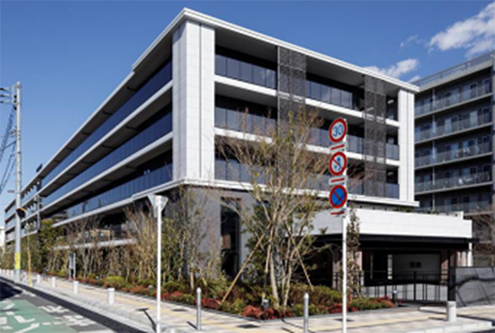
Tonowa Garden Mejirodai (commercial assisted living facility)
People-Centered Urban Development Underpinned by a Single Integrated Workplace
In the Marunouchi area (Otemachi, Marunouchi, and Yurakucho), where Mitsubishi Estate has launched initiatives under the concept of “Marunouchi as a Single Integrated Workplace,” the Company will accelerate higher-quality workstyles and greater efficiency for tenant companies by providing functions and value that view the entire area as a platform. We will create well-being-focused environments that can be enjoyed by workers and visitors alike by expanding a variety of measures, such as activities using existing outdoor space for events in which companies compete with each other and walkable urban development through pedestrianization. In April 2025, in recognition of the growing demand for recovery spaces among tenant employees, we launched the full-scale provision of Tomarigi, an intercompany shared service for wellness rooms featuring restorative amenities that help employees reenergize physically. Capitalizing on the area’s distinctive characteristics, namely its overwhelming concentration of companies, we will optimize tenant office space and streamline costs while supporting health and productivity management to enable employees to work in good health at a high level of productivity.
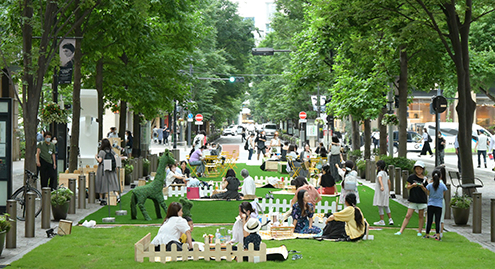
Pleasant outdoor space with abundant greenery
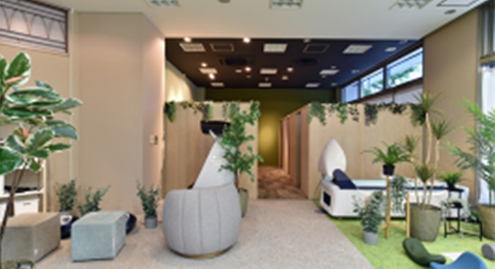
The Tomarigi shared wellness room (Otemachi Building)
Conducting Human Rights Due Diligence and Revising the Mitsubishi Estate Group Human Rights Policy
As a member of society, the Mitsubishi Estate Group strongly recognizes the importance of respect for human rights. Based on this recognition, it formulated the Mitsubishi Estate Group Human Rights Policy in April 2018 to fulfill its responsibility to respect the fundamental human rights of all Group employees as well as all stakeholders. Since formulating the policy, the Group has conducted business activities with respect for human rights, including implementing specific initiatives to address potential human rights risks in our businesses and carrying out human rights training. In 2024, we conducted human rights due diligence of all Group company businesses in response to the expansion of the Group’s business domains and changes in the business environment, and revised our human rights policy in April 2025 based on the results of the risk assessment. Reflecting changes in international human rights standards and societal demands, the revision is designed to promote more effective initiatives. The Group remains committed to addressing changes accurately and contributing to the realization of societies where everyone can live with peace of mind through sustainable and attractive urban development.
The Group has identified the following human rights issues to be addressed on a priority basis as a result of conducting human rights due diligence in FY2024.
- Working environment
- Children’s rights (including child labor)
- Labor standards
- Land rights Occupational safety and health
- Privacy and information security
- Forced, slave, and bonded labor
- Human rights and the environment

Promoting Initiatives to Establish a Sustainable Supply Chain
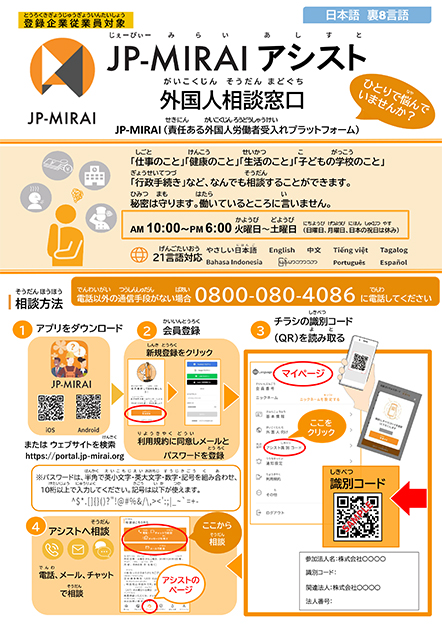
Consultation and grievance contact service for non-Japanese workers
The Mitsubishi Estate Group has led the way in the real estate industry in advancing various measures aimed at strengthening supply chain management from the perspectives of business and human rights and of environmental conservation. The Group applies the Mitsubishi Estate Group Supplier Code of Conduct to all Group companies and endeavors to understand actual circumstances on sites by conducting surveys using a questionnaire and in-person interviews of workers at construction and cleaning companies, which are relatively more likely to have higher sustainability risks.*1 In addition, we have introduced a consultation and grievance contact service at construction and cleaning sites for non-Japanese workers, which we are steadily expanding at relevant sites, to protect their human rights and establish a grievance mechanism. The Construction and Real Estate Human Rights Due Diligence Promotion Council,*2 launched with Mitsubishi Estate as the lead organizer, promotes cooperation among companies and conducts surveys and research to raise human rights standards across the industry. Guided by its responsibility as the industry’s leading company, Mitsubishi Estate will contribute to the ongoing development of suppliers and society.
- Criteria:
1) The supplier is likely to employ workers who may be in a vulnerable position, such as non-Japanese workers or technical interns.
2) The supplier’s business has a major impact on the environment.
3) The supplier has a multi-level outsourcing structure, which makes risks difficult to understand and identify. - The organization’s name changed from the Construction and Real Estate Human Rights Due Diligence Study Group in April 2023.


